Hearing aids help many people treat their hearing loss and tinnitus by shaping the sound around them and improving their access to communication, music, and more! However, hearing aids do not cure hearing loss. Because every situation is unique, some patients might need other options. Bone-anchored hearing aids and cochlear implants are two unique solutions for patients, used in conjunction with or in place of traditional hearing aids.
At Albany ENT & Allergy, our experienced team, including Dr. Yufan Lin, MD, an otolaryngology–head and neck surgeon, will help you determine whether a hearing implant is the right choice for you. Dr. Lin takes a collaborative, patient‑centered approach to care, working closely with each individual to understand their needs and guide treatment decisions.
How do Bone-Anchored Hearing Aids Work?
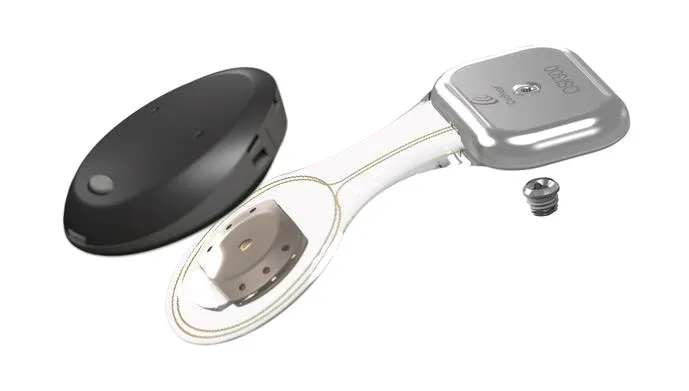
A bone-anchored hearing aid uses bone conduction to transmit sound to your cochlea. This can be used in cases of single-sided deafness, where one ear has little to no functional hearing or conductive hearing losses where there is a problem transmitting the sound normally through the auditory system, but hearing sensitivity in the inner ear is normal or near normal. With a device such as the Osia, Dr. Lin implants a small metal transducer in the temporal bone (right behind your ear), under the skin. After the surgical site has healed, a magnetic external processor would be worn over the transducer. This is the hearing aid portion of the device. Your audiologist would assist you with use, care, and programming of the external processor and Dr. Lin would manage the surgical follow-up.
How Do Cochlear Implants Work?
A cochlear implant is a device that stimulates the auditory nerve directly using an electrode ray inserted into the cochlea (or the “inner ear”). Different from a traditional hearing aid or bone-anchored hearing aid which amplify the sound which is ultimately delivered to the cochlea, causing outer haircells to move in response to the sound and create an electrical signal received by the auditory nerve; a cochlear implant sends electrical stimulation directly to the auditory nerve, bypassing those damaged haircells.
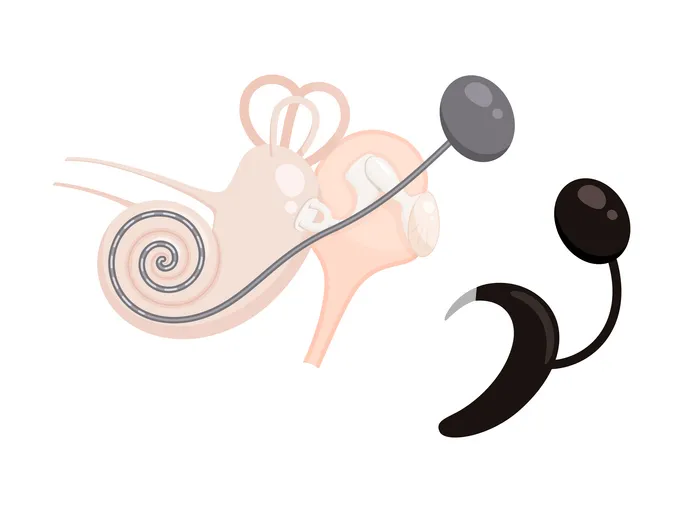
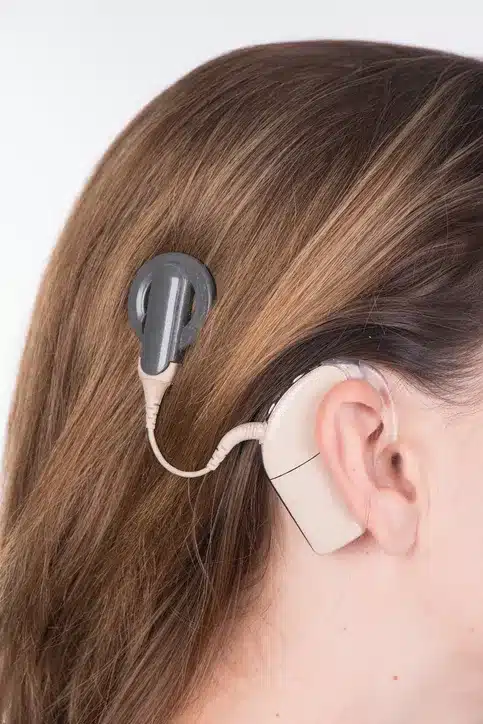
A magnet is placed on the temporal bone as the conduit between the external processor and the internal electrode. After a brief period of healing, your audiologist would fit you with your external processor which sits behind the ear, this is where the microphones are located, similar to the Osia and a traditional hearing aid. Dr. Lin would manage the surgical follow-up.
How Do I Know if Cochlear Implants Are Right for Me?
Implants are often used in the following circumstances:
- You’re experiencing hearing loss that is not helped by hearing aids.
- You miss half of spoken words or rely on lip reading, even with hearing aids.
- You have profound sensorineural hearing loss, a condition involving damage to your inner ear.
Your evaluation will include a thorough discussion of your hearing history, goals, and specific diagnostic testing (e.g., diagnostic imaging, speech in noise testing, etc.). Dr. Lin and the Albany ENT & Allergy Audiology team believe in shared decision‑making and will walk you through all available options and realistic expectations, so that you feel informed and confident moving forward.
What Are the Potential Benefits of Implantable Devices?
- Improved functional hearing ability, including in background noise, if hearing aids have not been successful for you.
- Improved music appreciation and sound quality in cases of severe hearing loss.
- Increased confidence in social situations.
When Is the Best Age To Receive Hearing Implants?
This question is certainly person-specific! There is no longer a medical consensus of “too old for a cochlear implant.” Many factors go into determining candidacy and expectations after surgery; some include general health, cognitive function, and years of hearing loss with/without proper amplification. We are happy to discuss this with you, taking into account your specific needs and concerns.
While very young children may be candidates for cochlear implantation, patients who are considered “pre-lingual” meaning before language development, have specific needs and concerns that we prefer to be handled by a pediatric cochlear implant specialist – for such services we’d be happy to refer your family appropriately.
How Do I Receive a Hearing Implant?
If cochlear implantation is recommended following the comprehensive candidacy evaluation, Dr. Lin will guide you through the surgical process with careful attention and clear communication. Following surgery and healing, your audiologist will program the device to meet your unique hearing needs and teach you how to care for it.
As with any new hearing loss treatment plan, your audiologist will enroll you in an auditory training program. Auditory training (or Aural Rehabilitation) is like physical therapy for your listening centers of the brain. This is particularly important in the case of cochlear implantation, where your brain will be learning a new “language” of electrical signals. Auditory training is a longstanding evidence based practice which will help you to be successful and confident with your new device.
Our Team Is Here For You
It’s easy to feel overwhelmed when thinking about receiving cochlear implants. Undergoing surgery and taking the time to learn to interpret the new sounds that you’re hearing can feel daunting, and you might not know where to start. At Albany ENT & Allergy, we’ll guide you through every step of the process.
Frequently Asked Questions
Am I a candidate for a cochlear implant?
You may be a candidate for a cochlear implant if you have hearing loss that is not helped by hearing aids or significant sensorineural hearing loss, a condition involving damage to your inner ear.
Can I get a cochlear implant in one ear and keep a hearing aid in the other?
This is a common occurrence when a patient has hearing loss in both ears. Hearing well in both ears reduces listening effort and allows you to better understand speech in background noise.
How is a cochlear implant different from a hearing aid?
Hearing aids amplify sounds. Cochlear implants completely bypass the ear’s damaged parts to stimulate the auditory nerve.