Informed Decision-Making Starts With A Hearing Test
Hearing loss treatment is a major decision that can lead to numerous benefits and an overall improved quality of life, and it starts with a hearing test. Assessing your hearing health enables our expert team to create and recommend a personalized treatment plan tailored to your hearing needs.
When Do Patients in Albany Need Their Hearing Tested?
If you have noticed any changes—either sudden or gradual—in your ability to hear, then your next step is to get your hearing tested. If you don’t believe you have symptoms of hearing loss but are over the age of fifty, the World Health Organization recommends getting a routine hearing test every five years to establish a hearing baseline and monitor for changes.
Treating hearing loss can significantly improve your physical health, emotional well-being and professional success. Beginning hearing loss treatment has been correlated with:
- Reduced feelings of loneliness and social isolation
- Reduced chances of depression, anxiety and other mental health issues
- Decreased fall risk
- Increased memory performance
- Relief from listening fatigue, in which excess brainpower is used on the hearing process, leading to brain fog and mental fatigue
- Improved work performance
A Hearing Test Is Quick, Painless and Provides Immediate Results.
Whether you just need a hearing screening or an audiological assessment, testing methods are fast and noninvasive, and same-day test results typically allow an audiologist to provide an immediate diagnosis. You and your audiologist will then use that diagnosis to map out your hearing loss treatment.
What Happens at a Hearing Test Appointment at Our Practice?
We’ll start with an initial consultation to discuss your symptoms, medical history, lifestyle, work and many other factors to gain a complete understanding of your hearing needs.
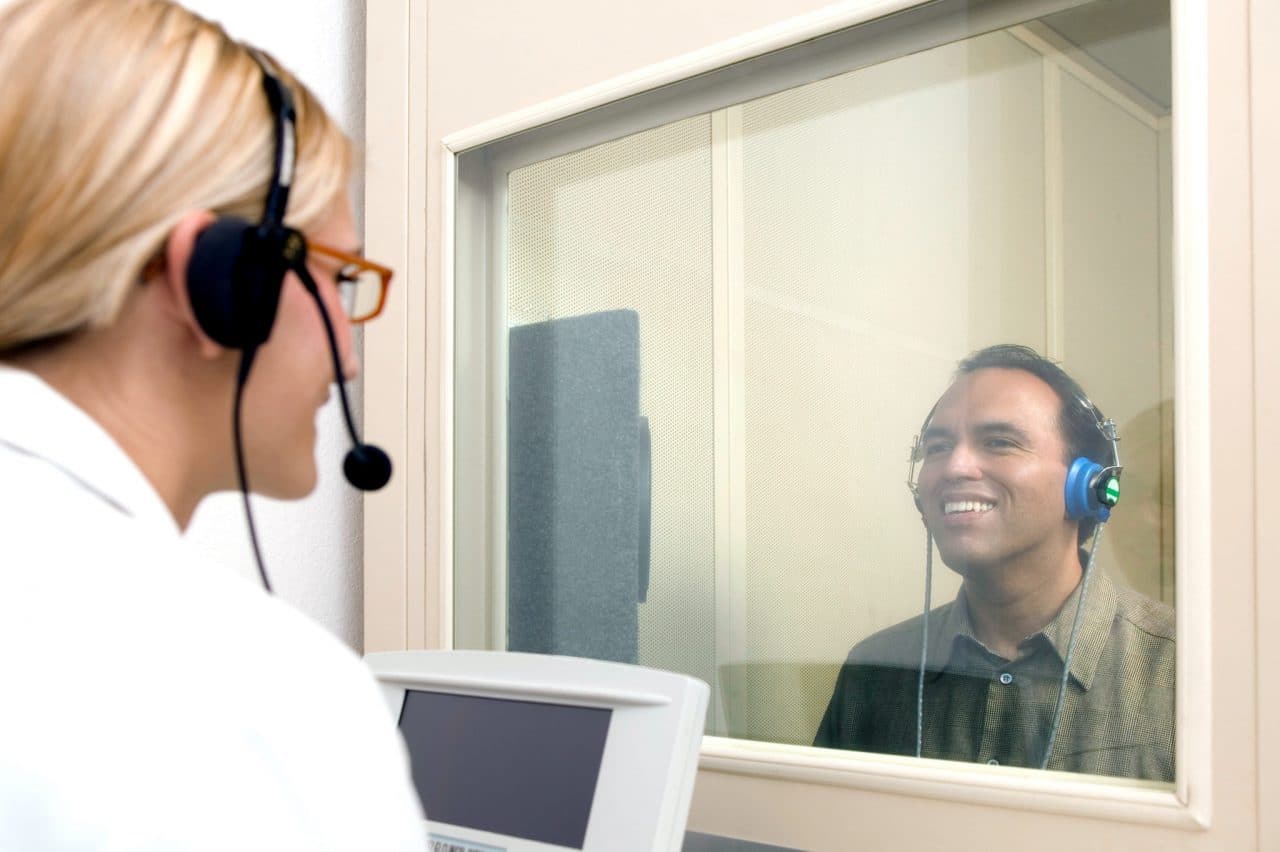
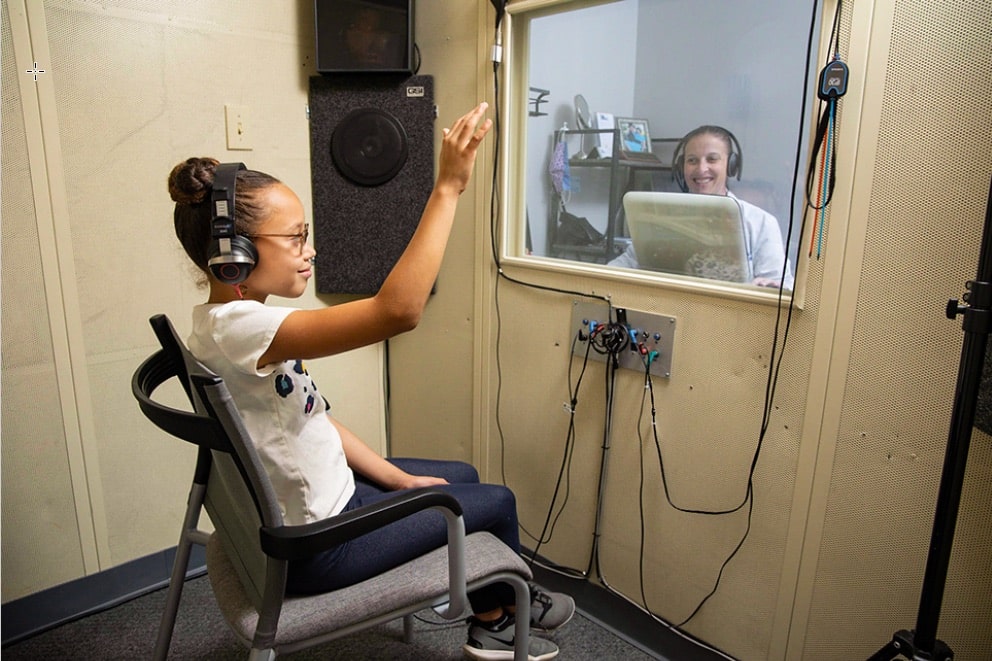
Next we’ll test your hearing. This typically takes place in a soundproof room, which helps block out additional noise. You’ll wear headphones that play a series of beeps at varying pitches and volumes, and your audiologist will ask you to raise your hand when you hear one. This is called a pure-tone hearing test and helps by identifying the quietest sound you can hear.
There are several types of hearing tests, and your audiologist may elect to do more than just a pure-tone test depending on your symptoms and information from your consultation.
What Does an Audiologist Measure?
Your audiologist will use the results from your hearing test to discover:
- What type of hearing loss you have
- What caused your hearing loss
- Whether your hearing loss is unilateral (only present in one ear) or bilateral (present in both ears)
- How your ears respond to loud sounds
- The quietest sound you can hear at different pitches
- How well you can hear and understand speech
- The movement capacity of your eardrum
Guiding Your Next Steps
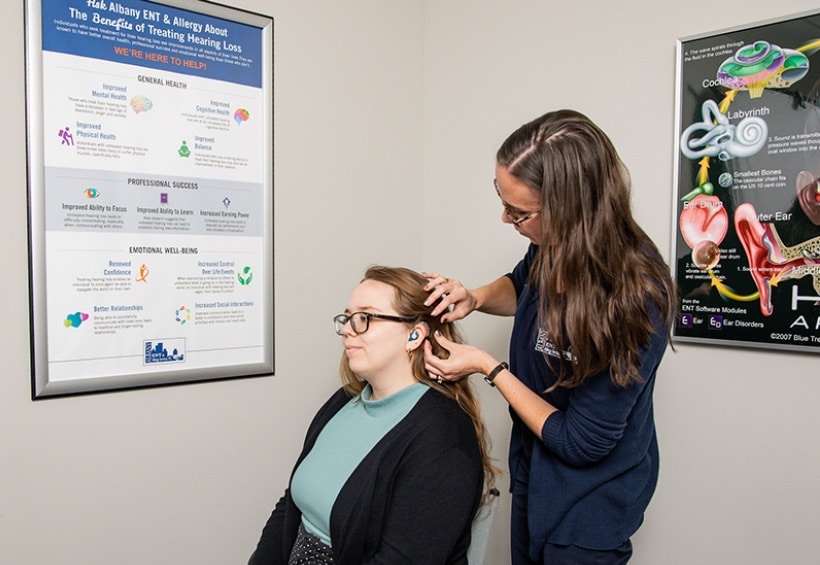
Your results determine what options we’ll recommend, and that’s why we take the time to guide you through them and answer every question along the way. Hearing devices may be the most common treatment option, but their technology, style and capabilities are unique to each model. Your audiologist will work with you to make the best decision possible for you and help you adjust to a whole new way of hearing the world.
Call Albany ENT & Allergy Services at 518-701-2085 for more information or to schedule an appointment.
Meet Our Audiology Team

MD, FACS, FAAOA, FARS
MD, FACS, FAAOA

MD, PhD, DABSM, FACS, FAAOA

MD, MBA, FACS, FAAOA

MD, FACS, FAAOA, FARS

MD, FAAOA

MD

MD

MD

MD

MD
Call Albany ENT & Allergy Services at 518-701-2085 for more information or to schedule an appointment.